
Yellow fever is more than just a fever. It is a potentially life-threatening viral disease spread through the bite of an infected mosquito. The 'yellow’ in the name refers to the jaundice that affects some patients.
While Southern Africa has historically experienced fewer yellow fever outbreaks than West or Central Africa, the risk remains. Gaps in vaccination coverage, population movements and urbanisation can create the conditions for outbreaks to spread quickly. Vaccination is one of the most effective ways to prevent yellow fever and stop outbreaks before they escalate. For communities at risk, timely vaccination and a rapid response can make the difference between containing an outbreak and watching it grow.
What are the symptoms of yellow fever?
There is no specific antiviral treatment for yellow fever, making prevention essential. Symptoms usually appear three to six days after infection and can range from mild to severe.
Early symptoms may include:
- Fever
- Chills
- Headache
- Muscle pain
- Nausea
- Vomiting
For some people, the disease progresses to a severe, or toxic, phase that can be fatal. Symptoms at this stage may include jaundice, which causes the skin and eyes to turn yellow, abnormal bleeding, and liver and kidney failure.
How is yellow fever spread?
Yellow fever is transmitted through the daytime bite of infected Aedes mosquitoes. These mosquitoes can transmit the virus after becoming infected, helping to spread the disease between people. In tropical forests, yellow fever can also circulate between mosquitoes and primates, with humans becoming infected when bitten by an infected mosquito.

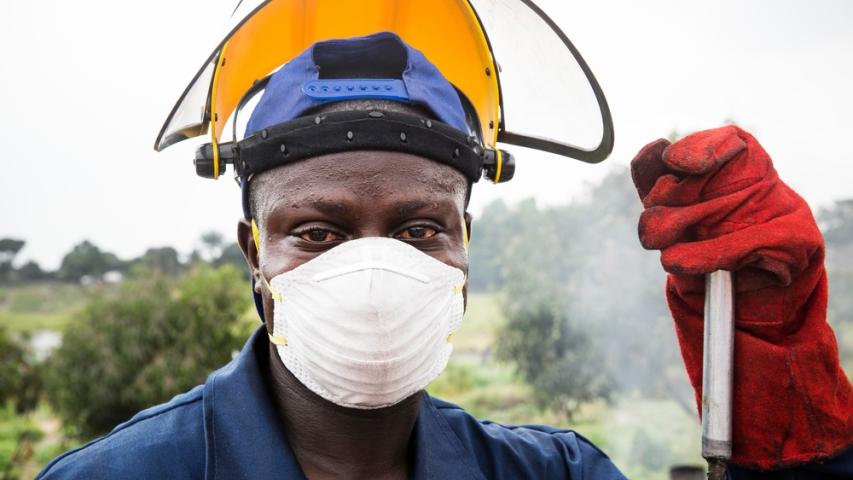
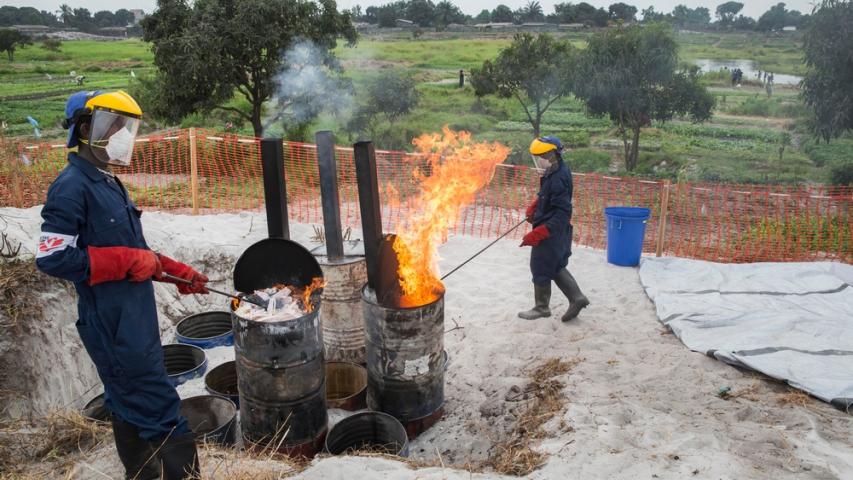
Hervé Tembe Luzitu is responsible for waste management across different vaccination sites. Used needles and other medical waste are collected and brought to him daily for safe disposal.

Gathering of waste in the vaccination areas. There are three types of waste: safe box syringes, vials and other waste (gloves , paper, packaging, etc.) . First they burn the syringes to ensure they do not circulate on the vaccination site. They are burned and then poured into a barrel to three quarters . The last remaining quarter will be filled with cement that will harden and pack everything.

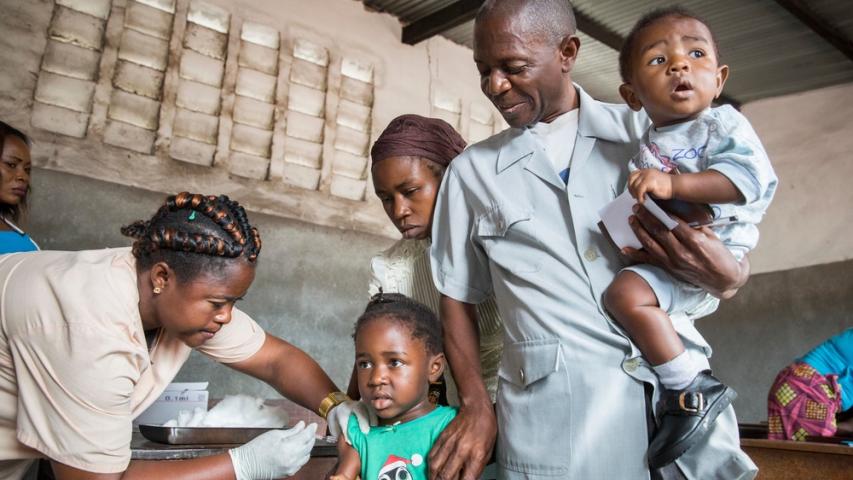
Pasteur Thierry Kasiala goes with his family to a vaccination center in the zone of Mfumu Nkento. He's accompanied by his wife Henriette, his daughter Sidonie (4yrs) and his baby son Emery (9m) and the community worker Bertin. Thierry is a pasteur in the christian church 'Assemblée de Kinshasa'. He has also created an ngo which is helping people who are suffering from malnutrition and HIV/Aids. His church is very popular and has over 3000 members.

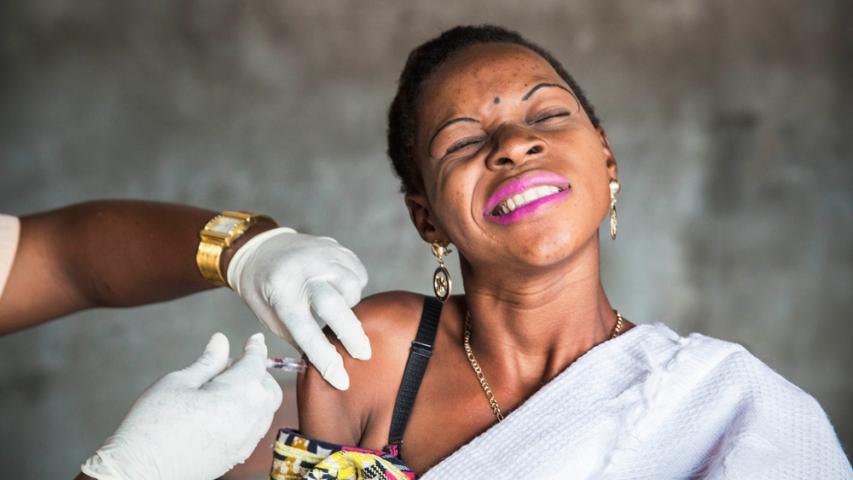
A woman receives a vaccination in Kinshasa.

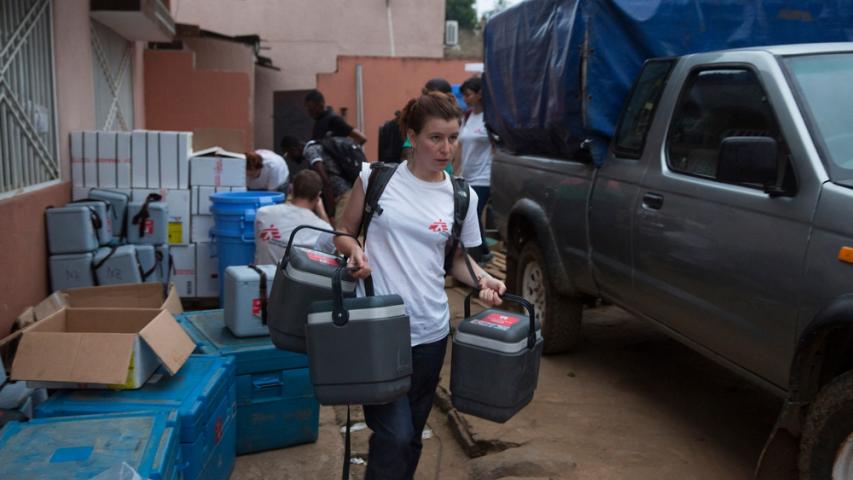
A Medecins Sans Frontieres (MSF) staff member carries cold boxes containing yellow fever vaccines on the first day of the vaccination programme in Matadi, DRC.
How can you protect against yellow fever?
- Getting vaccinated - The yellow fever vaccine provides long-lasting protection and is a key tool in preventing and controlling outbreaks.The yellow fever vaccine is safe, affordable, and highly effective. A single dose gives lifelong protection for most people, with protective immunity developing within 10 to 30 days
- Preventing mosquito bites - Use insect repellent, wear clothing that covers the skin, and use mosquito nets where appropriate.
- Reducing mosquito breeding sites - Removing standing water and other potential breeding sites can help reduce mosquito populations.
- Raising awareness - Health education and community engagement help people understand the risks of yellow fever, recognise symptoms and learn how to protect themselves.
How does Doctors Without Borders (MSF) respond to yellow fever emergencies?
When outbreaks happen, our teams move fast, focusing on the following:
- Containing outbreaks - We help contain epidemics through large-scale vaccination campaigns and community-wide insecticide spraying to reduce the spread of infected mosquitoes.
- Patient care - MSF provides treatment for people with severe yellow fever and supports health facilities to manage complicated cases.
- Support to local health facilities - During outbreaks, we work alongside national and local health authorities by preparing hospitals, strengthening case management, and training healthcare workers.
- Vaccine access - Doctors Without Borders maximises the impact of limited vaccine supplies and advocates for more vaccines and stronger routine immunisation coverage.
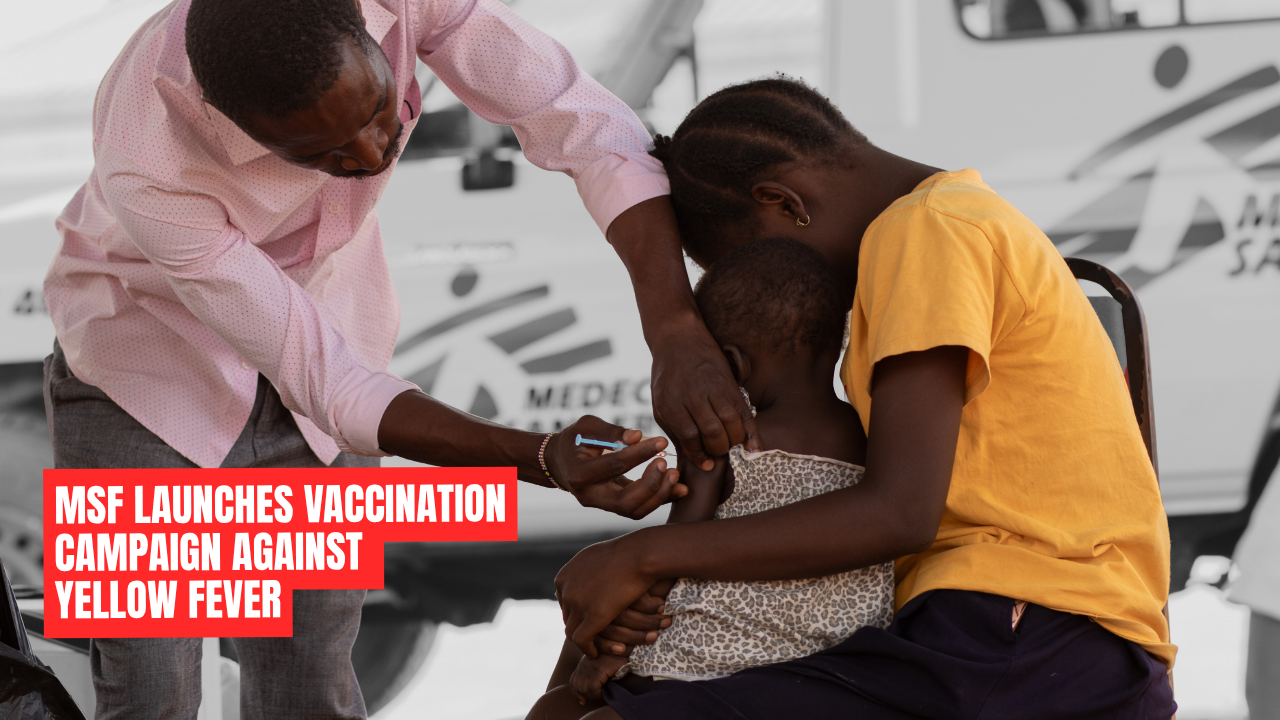
video footage from the 2015 vaccination drive in Matadi, Angola
2015: The biggest outbreak in numbers
The largest yellow fever outbreak of the past 30 years began in Angola in December 2015 and spread to the neighbouring Democratic Republic of Congo (DRC). We took part in the emergency vaccination response in both countries.
In recent times, epidemics have developed in forested areas or around water points. In Angola, however, the outbreak developed in the capital, Luanda, which had been spared for decades and where there were no mosquitoes carrying the virus.
The disease was probably brought to Luanda by a person who had contracted it in the forest, or who brought in the eggs of mosquitoes carrying the virus. The outbreak therefore began with a limited number of infected people and mosquitoes. However, the epidemic affected a very popular market visited by people from across the city, who then spread the virus.
By the time the outbreak was discovered and a response could be put in place, the number of cases among humans had risen, and consequently, so had the number of infected mosquitoes. The epidemic then spread to other provinces and, through travellers, to countries including China and Kenya, and later to the DRC.
• MSF mobilised 100 teams – 160 people – from 20 countries.
• 65 vehicles transported the teams where they were needed most.
• In Kinshasa, DRC, we vaccinated 760,000 people, about 10% of the city’s target population.
• In Matadi, near the Angolan border, 69 teams vaccinated 370,000 residents in just 10 days.
Frequently Asked Questions About Yellow Fever
The disease is spread through the bite of infected day-biting mosquitoes.
Diagnosis can be tricky as the symptoms are similar to various other and more common diseases like malaria. A simple blood test can determine whether you are infected with the disease or not.
According to the WHO, about 15% of people infected with yellow fever will develop a severe infection, and about 50% of patients in this phase die within 7 to 10 days. Between 30,000 to 60,000 people die of this disease each year, mainly in Africa.
There’s no specific cure, so prevention through vaccination and mosquito control is critical.
Anyone older than 9 months living in or travelling to areas at risk is recommended to get the vaccine.
Twenty-seven African countries and 13 Latin American countries are classified as high-risk for yellow fever outbreaks.
What to remember
- Yellow fever remains a serious, vaccine-preventable disease that is endemic in Africa and has the potential to spread in Southern Africa.
- Lifesaving strategies, including mass vaccination campaigns, mosquito control, and rapid outbreak responses, are key.
- Doctors Without Borders (MSF) continues to work with communities, governments, and global health partners to reduce yellow fever transmission and save lives.
Support MSF’s emergency outbreak response
From yellow fever to cholera and measles MSF teams respond rapidly to infectious disease outbreaks worldwide.