
Key Takeaways
- Anti-migrant violence protests since 30 June have forced tens of thousands of people to flee South Africa, disrupting their access to HIV, TB, and other chronic medication.
- MSF is running medical clinics at the South Africa-Zimbabwe border towns of Musina and Beitbridge, treating trauma, chronic pain, hypertension, HIV, and TB patients.
- South African authorities report over 53,000 migrants processed for repatriation, with media reports citing 34,000 people returning to Malawi and 100,000 to Zimbabwe.
- Patients describe defaulting on ARV and chronic medication for weeks due to fear of accessing healthcare facilities, worsening their health outcomes and risking drug resistance.
- MSF is calling on governments in the region to strengthen collaborative efforts to ensure continuity of care for displaced and returning patients.
A Border Town in Crisis
People fleeing violence, intimidation and harassment sparked by anti-migrant protests on 30 June need ongoing medical care, protection and humanitarian support as tens of thousands move through South Africa on their return journey to neighbouring countries. Doctors Without Borders (MSF) meets traumatised patients, and many displaced people who have had disrupted access to life-saving HIV and other chronic medication at the South Africa-Zimbabwe border towns of Musina and Beitbridge.
Run by the South African government, the remote temporary repatriation centre about 20 minutes' drive from the small town of Musina is dusty and dotted with large white tents, where, despite it being winter, the mercury hovers around 30 degrees Celsius. Thousands of people gathering there are fearful and desperate; the mood is overwhelmingly desolate. The medical tent where MSF runs a clinic is quite far from where people queue daily for buses back to their home countries, making it harder to reach some patients.
The narrative that the so-called 'self-repatriation' process is always voluntary is questionable, as many fearful Malawians, Mozambicans and Zimbabweans insist that they are documented but have little choice other than to flee for their safety.

Patient Stories from the Border


Jul 2026
Munyaradzi
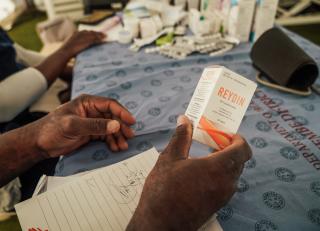
While working in a Zimbabwean gold mine six years ago, *Munyaradzi was exposed to a toxic chemical and still struggles with debilitating pain. Now 34-years-old and travelling to Musina from where he has been living in Dennilton, a rural town straddling the Limpopo-Mpumalanga provincial border in South Africa, he has not had access to his chronic pain medication for seven weeks.
"That chemical affected me 2020 and I started drinking tablets from that year until now... I know they don't like us here in South Africa, so I get my mind to go back home, but the police catch me before I go ... they take me to police station. I told them about my situation that I am drinking tablets. [The police] didn't take me to clinic until now. That is why I am come here because I am trying to get my medicine. My body has got so much pain. The chemical enter in my skin and start to damage my muscles and bones."

Jul 2026
Nobuhle
Across the border in Beitbridge, MSF counsellors are concerned about the trauma their patients are experiencing. *Nobuhle, who has been living in Soweto, Johannesburg, and working as a chef at a local restaurant, was devastated to return home from work on 17 July to find her house had been burnt down. Luckily, her three children were away at the time.
"I found my house burnt. I lost my passport and permit, all my clothes and furniture, my children's birth records and birth certificates. I have nothing with me. All I have is this small handbag. I do not even have a change of clothes. I thought having a passport and permit would save me, but no, I was wrong. I wanted to kill myself. I have lost hope, and I do not know what I will do."

Jul 2026
Joyce
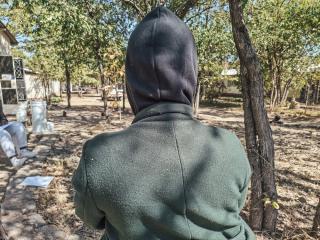
"Doctor say my blood pressure is 214/95. Clinic no go before, too scared. I go to home because they tell foreigner to hamba (leave). I am scared [of] South Africans." - Joyce
MSF teams are also treating many patients who do not have access to their chronic hypertension medication. Left untreated, high blood pressure can lead to serious complications, including strokes, heart failure, blood clots and even death. In Musina, the MSF team treated *Joyce, a Malawian woman from Boksburg North near Johannesburg.

MSF's Medical Assessment of the Crisis
Caroline Masunda, MSF emergency medical team lead in Musina, says:
"We are concerned about access to healthcare disruptions and continuity of care for people living with chronic diseases such as HIV, TB, diabetes, hypertension and mental health conditions. We are seeing a trend in Musina of patients who have been unable to access life-saving HIV and TB treatment for months after being turned away from South African healthcare facilities because they are migrants, increasing their risk of treatment failure and, in some cases, developing drug resistance."
Scale of Displacement
While South African authorities have reported processing over 53,000 migrants for repatriation, many people continue travelling through informal routes. Media reports indicate that 34,000 people have returned to Malawi and 100,000 to Zimbabwe, illustrating the regional scale of displacement.
"More than 100,000 people fleeing or being displaced are the kind of numbers MSF see in hot conflict areas, not relatively stable democracies like South Africa. With so many displaced people, we call on governments in the region to step up collaborative efforts to ensure continuity of care for patients," says Caroline Masunda, MSF emergency medical team lead.

Gaps in the Repatriation System
Thousands of people are processed daily in Musina and stay there for an average of 24 hours. While the system appears efficient, MSF warns that vulnerable people may be missed because they are reluctant to leave queues to seek medical care or because they move on before receiving assistance.
*Please note, due to high levels of fear and the sensitive nature of the context, we have changed some patients' names.

Azalet Dube: The health promoter who believes in the power of teamwork

MSF expands humanitarian assistance to Nyamapanda in support of Malawians
