
More than seven weeks after the war in Iran began, Doctors Without Borders (MSF) teams are expanding activities in Tehran and continuing to respond to growing medical needs in other areas where the organisation works. While a ceasefire currently in place has brought some relief, the situation remains fragile for many people who rely on essential healthcare services.
Prior to the start of the war, MSF had been running activities in South Tehran, Mashhad, and Kerman province, mainly focusing on primary healthcare for people who face challenges in accessing health services, particularly Afghan refugees.
At the height of the violence, during a period of intense bombing, MSF had to temporarily suspend its activities in its clinic in South Tehran. This clinic has since reopened, and MSF has received authorisation to operate the clinic as an advanced medical post, able to receive wounded and stabilise patients in critical condition, if needed. It has also expanded its services to all Iranians, and the number of consultations has doubled since the ceasefire. Around 250 patients are now treated at the clinic each day.
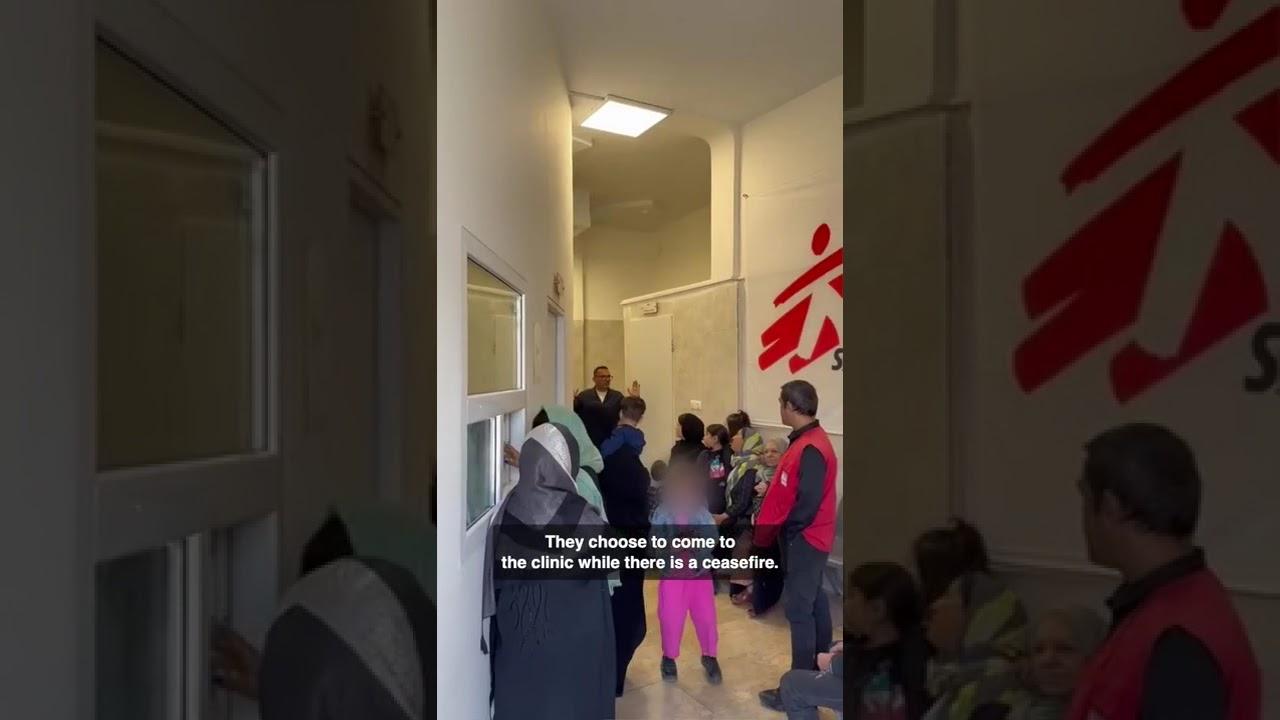
Despite ceasefire, Healthcare System Under Pressure
“Primary healthcare is often among the first services to be disrupted during emergencies, yet it remains one of the most essential,” says Grigor Simonyan, MSF’s Head of Mission in Iran. “People still need treatment for common illnesses and for chronic diseases such as diabetes and high blood pressure. And, especially after the trauma of war, many will need mental healthcare support.”
To further expand access to primary healthcare, MSF plans to open a second clinic in South Tehran.
MSF’s clinics in Kerman city, in the southeast of the country, are seeing around 150 patients per day, also providing essential primary healthcare. An estimated 200,000 Afghan refugees live in the outskirts of the city, and MSF is the one of the only medical organisations providing healthcare to them.
In Mashhad, northeastern Iran, near the border with Afghanistan, MSF has continued to provide healthcare services, including mental health support, to more than 160 patients per day in the clinic in the Golshahr district, where most of Mashhad's Afghan refugees live.
In all locations, MSF delivers a range of medical activities including sexual and reproductive healthcare, screening and treatment for infectious diseases such as hepatitis C, mental health support, management of chronic illnesses, and referrals to specialised health facilities.
Civilians continue to bear the highest cost of this war. Full respect and protection of medical facilities and health workers is critical to ensure people can access care whenever and wherever they need it.Grigor Simonyan, MSF’s Head of Mission in Iran
A health system under extreme pressure
Despite parts of the health system continuing to function, the war has placed Iran’s healthcare services under extreme pressure, with hospitals, clinics and ambulances hit and damaged.
As of 15 April, the World Health Organization had verified 24 attacks on healthcare in Iran, putting strain on the health system and humanitarian responders.
“Iran also relies heavily on locally manufactured medicines, and pharmaceutical production has been severely disrupted as a direct result of this war,” says Simonyan. “We are seeing more and more people affected by a lack of access to essential medicines.”
In response, MSF has donated medicines and supplies—including paediatric and trauma care kits—which are being distributed and used by the Iranian Red Crescent Society. Additionally, MSF has donated essential items, such as blankets, pillows and hygiene kits, also through the Iranian Red Crescent Society, to support people affected by the crisis.
As the crisis approaches its third month, MSF remains ready to adapt and scale up further its activities in response to evolving medical needs, in collaboration with the authorities.
“Civilians continue to bear the highest cost of this war,” says Simonyan. “Full respect and protection of medical facilities and health workers is critical to ensure people can access care whenever and wherever they need it.”

Sudan's patients are still here but the clinics they need are disappearing

In Port-au-Prince, women are risking their lives to access sexual and reproductive healthcare
