

The intensification of the conflict in Cabo Delgado, northern Mozambique, continues to uproot lives and force people to flee. Civilians are being attacked by a non-state armed group, which continues to clash with local and regional armies. People face violence and a pervasive sense of insecurity, driving massive displacements as families leave their homes in search of safety. Ensuring the protection of civilians, medical facilities, and humanitarian workers must remain a priority in this escalating crisis.
When Bernardo and his wife Alima fled their village of Criação, they carried almost nothing with them. They only hoped to find out what happened to their daughters, who were nine and six when armed men abducted them in 2020. For years, the couple heard nothing. Only recently, a survivor who escaped captivity brought news that they were still alive. “Every thought leads nowhere,” Bernardo tells our teams in Mueda, where his family has lived in a camp for displaced people since October. They are unsure whether they will ever see their daughters again.
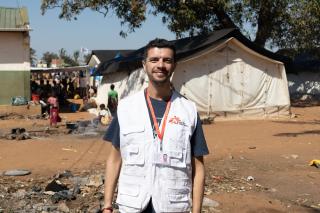
Eight years into the conflict in Cabo Delgado, fear and uncertainty are a daily reality for hundreds of thousands of people in this northern Mozambican province. While international attention gravitates toward the reopening of major energy projects and the security around key resources in the province, the people who have been living through this underreported crisis remain out of the spotlight.
Since October 2017, more than 6,000 people have been killed, and over one million people – about a third of the population of Cabo Delgado – have been forced to flee their homes, about half of whom remain displaced. Since late July, Cabo Delgado has experienced devastating levels of violence. This year is now the most violent one on record in terms of the number and frequency of security incidents. More than 500 occurred in the first eight months of 2025, including brutal assassinations, kidnappings, lootings and arson.

Attacks have struck most districts of the province and spilled into neighbouring Nampula and Niassa. Tens of thousands of people have recently fled their homes. For many, it is not the first time. Some are returning to the very same camps where they sought refuge during the deadly attacks of 2020 or 2021.
Families often leave their homes with little more than the clothes they wear. But they carry a heavy burden of fear, exhaustion, and trauma.
Lives upended, health under threat
The displacement site of Lianda has been Bertina’s home for three years, despite mounting difficulties. Food is limited. The plastic sheeting covering her house is so damaged that rain leaks inside. Water is scarce: it might take up to three days to collect just 40 litres, which is barely enough for one day for her family of nine.
In her home village in Nangade, she used to harvest a dozen sacks of cashew nuts each year. It was enough to sustain the entire family and build a house with a private water tank. After her village was attacked, only the water tank remains.
Violence in Cabo Delgado
Bertina is not alone in her experience. Many people tell our teams they saw their houses burn down, their businesses vanish; they left behind farmland and possessions; they lost loved ones. And while they now find a sense of safety in the displacement camps, their physical and mental health remains under threat.
Years of conflict have severely weakened northern Mozambique’s already fragile health system. Devastating cyclones, such as Chido in late 2024, regularly hit and add another layer of complexity to this climate-vulnerable country. Multiple facilities have been destroyed or abandoned, while others operate with minimal staff and supplies. Health workers, understandably, are often among those who flee after attacks. This means that the healthcare system, already stretched thin, lacks important resources.
In some districts, measles vaccination coverage remains dangerously low. Pregnant women often give birth at home because movement is unsafe, health centres are closed, or they simply do not have the means to reach them. Treatment for HIV and tuberculosis, which requires regular monitoring and follow-ups, are repeatedly interrupted when violence surges, leaving thousands of people at risk of severe illness and drug resistance.

Humanitarian organisations, including Doctors Without Borders (MSF), face growing challenges reaching the people who need them most. Mobile clinics are routinely suspended due to insecurity. When violence escalates, entire health programmes — from emergency care to community outreach — come to a forced halt.
Eight years on, we cannot look away
Despite this worsening reality, Cabo Delgado rarely gets international media coverage unless major attacks occur or there are developments on energy projects. Yet behind numbers and headlines – or lack thereof – are people living in fear. Families are dismembered, crops are abandoned, water sources lost and access to healthcare services repeatedly interrupted.
MSF is calling on all armed actors to prioritise the protection of civilians and ensure their safe access to basic services. They must respect and protect medical services, enabling health workers to provide care in health structures and in mobile clinics.
Ultimately, people in Cabo Delgado want safety. They want to rebuild their lives. Some still hold on to the hope of returning home, even when nothing is left. Others no longer believe they will ever go back, but they are unable to make plans for a future elsewhere.
With many escalating crises in the world, it is hard to determine what should get our attention. But people in Cabo Delgado are simply asking for a chance to live without fear.
In Cabo Delgado, MSF runs projects in Mueda, Mocímboa da Praia, Macomia and Palma, while reaching neighboring districts. We provide outpatient consultations, emergency care, maternity and paediatric services, treatment for HIV and TB, as well as mental health and psychosocial support. In the first half of 2025, we carried out nearly 100,000 outpatient consultations and conducted mental health group activities for over 35,000 people. We run mobile clinics and outreach activities, refer patients to health centres and support medical facilities and hospitals in collaboration with the Ministry of Health.

MSF responds to displacement crisis in Northern Mozambique

MSF concludes emergency response in northern Mozambique, but critical gaps in healthcare access remain
