
Key Takeaways
- Lenacapavir is a twice-yearly injectable PrEP that has been found to be nearly 100% effective in preventing HIV transmission.
- Gilead earned US$20.8 billion from HIV products in 2025, more than the Global Fund spent on responding to HIV over 2015-2025 (US$20.1 billion).
- In the US, Gilead charges more than US$28,000 per person per year for lenacapavir, while generic manufacturers have committed to selling it for $40 a year once approved.
- Brazil, Argentina, Mexico and Peru hosted clinical trials that proved lenacapavir works but remain excluded from Gilead’s voluntary licence for affordable generics.
- MSF calls on Gilead to sell lenacapavir at $40 or less in all low- and middle-income countries, increase supply to meet demand, and sell directly to MSF.
What is lenacapavir and why does it matter for HIV prevention?
Lenacapavir is a form of long-acting injectable pre-exposure prophylaxis (PrEP) that has been found to be nearly 100% effective in preventing HIV transmission. Administered just twice a year, it represents a transformative advancement in HIV prevention—especially for communities facing stigma and systemic barriers to daily pill adherence and access to care.
Gilead’s HIV earnings compared with global HIV funding
On 29th October, lenacapavir’s originator, US pharma corporation Gilead Sciences, will release its financial results for the third quarter of 2026. The numbers will likely be substantial: Gilead earned more from HIV products in 2025 (US$20.8 billion) than the Global Fund spent on responding to HIV over the decade 2015-2025 (US$20.1 billion). In the US, Gilead charges more than US$28,000 per person per year for lenacapavir, while generic manufacturers have committed to selling it for $40 a year once they are approved.

Real stories: people affected by Gilead’s control over lenacapavir
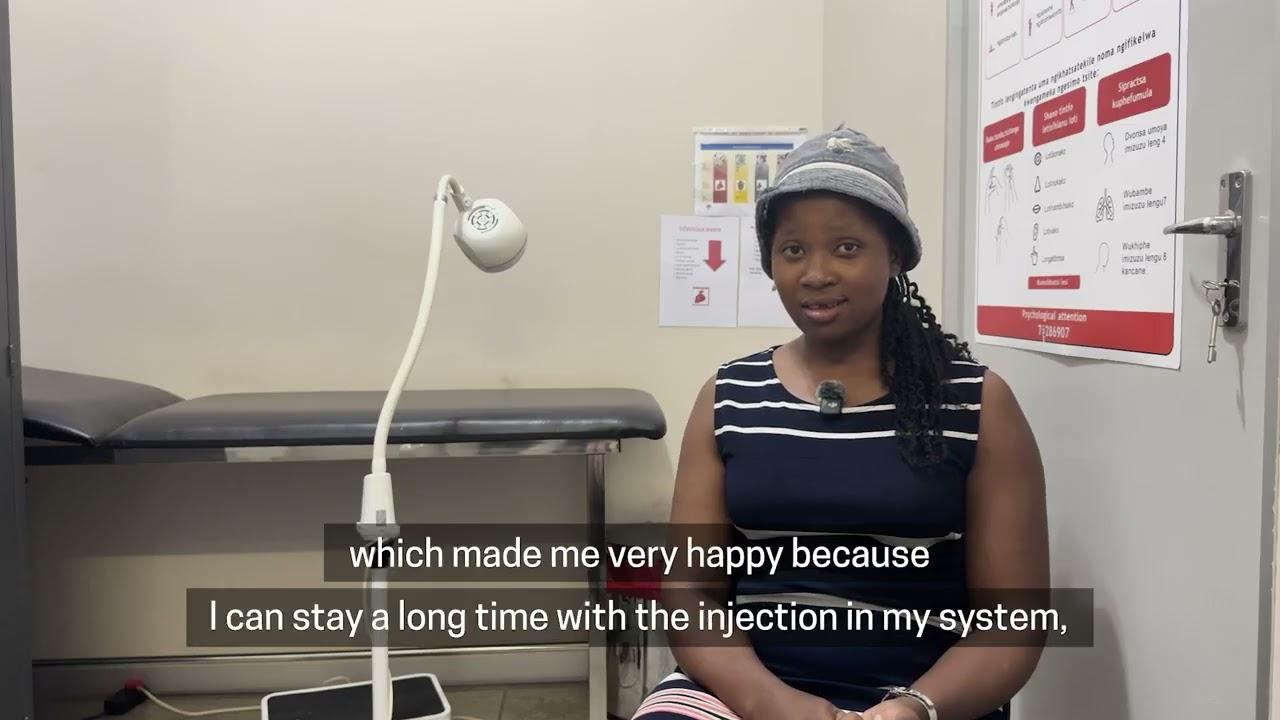
Philiswa Mbingo, Eswatini: choosing twice-yearly lenacapavir
Philiswa Mbingo is a 26-year-old woman who lives in Eswatini, the country with the highest HIV prevalence in the world. Here, one quarter of everyone aged 15-49 is HIV positive.
For Philiswa, HIV prevention is important.
“I am a very young woman, and in our times there are a lot of things that can happen to you unexpectedly,” she says, reflecting on the complex realities many young women face in Eswatini, where sexual violence against women and girls is high.
While aware of oral PrEP, a pill which, if taken daily, will prevent HIV, she has chosen not to use it. “I heard about the PrEP oral pills and I do not prefer them as pills give me a hard time.”
Instead, she has explored other options: “My first encounter with PrEP was with the PrEP ring, which you insert inside your vagina,” she says, referring to the dapivirine ring, which is replaced every 28 days.
However, it was the introduction of long-acting injectable PrEP, that marked a turning point. “I then heard about the six-month PrEP injection [lenacapavir] which made me very happy,” she says. She was able to receive lenacapavir at an MSF clinic. MSF cannot buy lenacapavir, so it was allocated a limited number of doses from the Ministry of Health.
The extended protection of lenacapavir appealed to Philiswa, reducing the need for frequent clinic visits. “I can stay a long time with the PrEP injection in my system – for six months. I only take the injection two times a year.”
Beyond convenience, Philiswa believes the injectable option is more effective for her. “Another thing that made me change to take the injection is that it works better when compared to the ring,” she says. Lenacapavir, the six-monthly PrEP injection, has been proven to be nearly 100% effective in preventing HIV.
This makes lenacapavir an excellent option for her: “We normally say it is better to prevent than to treat.”
However, lenacapavir is still not an option for many others in Eswatini and around the world who are still waiting to access it.
Philiswa Mbingo
Thembi’s story: “I Want to Protect Myself. But the Injection Isn’t Available”
Every day, Thembi* makes decisions to protect her future.
The self-employed mother from Epworth earns a living selling second-hand clothes. She is informed about HIV prevention and believes everyone should have the opportunity to protect themselves.
"I am one person who is conscious about my body and my health," she says.
Like many young women in Zimbabwe, Thembi understands the realities of HIV. She knows how the virus is transmitted and the importance of safer sex, and prevention medicines such as pre-exposure prophylaxis (PrEP) and post-exposure prophylaxis (PEP). More recently, she learned about long-acting HIV prevention injections, including cabotegravir (CAB-LA) and lenacapavir (LEN), groundbreaking medicines that offer protection without the need to take a daily pill.
"I really want the injection," she says.
But wanting protection and getting it are two very different things.
Although she knows the injections are highly effective, Thembi has been unable to access them. In her community, supplies are limited and programmes are prioritising people who have already started receiving injections and need repeat doses. For new clients like her, the opportunity simply has not come."Here in
Epworth it is not easily accessible," she explains. "The programme is now focusing on those that have received the first jab and are coming back for repeat jabs. For LEN, the injections are limited as well and very few people are being considered."
For Thembi, the issue is not hesitation or fear. It is access.
"If it was available, I would take it," she says. "I would go for it when I am positive that the supply is not erratic and that I do not have to wait in long and winding queues to access it."
Her story reflects the experience of many people who are ready to benefit from the latest advances in HIV prevention but remain locked out because supplies are scarce and access is limited.

MSF calls on Gilead to sell lenacapavir at $40 or less in all low-and middle-income countries, increase supply to meet actual global demand, and sell lenacapavir to MSF directly so that MSF can supply this game-changing HIV prevention tool to those who are most in need, and who are not currently covered by the Global Fund agreement.
Brazil, Argentina, Mexico and Peru hosted clinical trials that proved LEN works but remain excluded from Gilead’s voluntary licence for affordable generics. Communities that contributed to developing this medicine are now being left behind
Gilead investors should not let another financial quarter go by without asking why Gilead is not making lenacapavir more accessible for everyone.

The fear that follows migrants returning to Zimbabwe from South Africa

A safe space for LGBTQI+ patients in San Pedro Sula
