In Venezuela, people are living with a practical collapse of the institutions that should cover their basic needs after more than 25 years of an authoritarian regime, corruption, and political repression. In 2025, economic deterioration, which was exacerbated by sanctions and political isolation, worsened in the face of withdrawn international aid funding. People, and especially women, are often unable to receive the care they need due to a lack of health professionals, functioning facilities, and essential supplies.
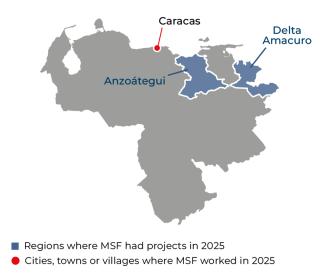
Our teams supported the public health network in Anzoátegui and Delta Amacuro states by providing direct care, including sexual and reproductive health services, and implementing infection prevention and control measures. In Anzoátegui, our activities included general healthcare, maternal and neonatal health services, family planning consultations, and treatment for victims and survivors of sexual violence. MSF promoted a comprehensive approach to sexual violence care in facilities across the state. In 2025, based on assessing people's needs, we refocused activities on reducing high levels of maternal and neonatal deaths.
To ensure the successful handover of our other activities in Anzoátegui, we donated medical supplies to the centres where we worked, performed preventive maintenance on medical equipment, and carried out structural renovations.
In Delta Amacuro, we continued to deliver medical care to remote, mainly Indigenous, communities, despite the logistical challenges posed by the geography of the state. Having to travel by river means that it can take people up to six hours to reach health facilities. Our teams in this area work to increase the provision of general healthcare, sexual and reproductive health services, and treatment for malnutrition, tuberculosis, and HIV, and to implement MSF technical protocols in specialities with high death rates, such as maternal and neonatal care.
Finally, the team carried out extensive preparation and planning for possible emergency scenarios arising from political instability and tensions between the governments of the United States and Venezuela.