Between January and June 2025, people continued to travel through Guatemala on their way north to the United States. Many arrived exhausted and traumatised after long journeys through Central and South America, having experienced incidents of violence, theft, and sexual assault along the route. Others needed care for respiratory infections, skin conditions, untreated chronic diseases, and gastrointestinal illnesses linked to unsafe water.
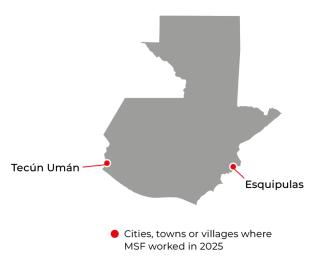
MSF teams worked in Esquipulas, near the border with Honduras, and in Tecún Umán, on the border with Mexico, offering general healthcare, psychological support, social work consultations, and health promotion activities. We also treated victims and survivors of sexual violence, providing preventive treatment for infections, emergency contraception, and mental health care. Many patients delayed seeking help due to fear, stigma, or uncertainty about their rights while travelling through the country.
However, by mid-year, the number of people crossing these border points had dropped significantly following changes in US migration policies, and, at times, many of the people we saw were recent deportees.
In October, after observing a sustained reduction in crossings, we ceased activities in both locations. Rather than a reduction in health needs, this decision reflected shifting migration dynamics and increasing challenges in reaching people in need.
Although fewer people are now travelling north through Guatemala, and some have moved back to their places of origin, many remain stranded in the country with limited access to medical services. We will continue to assess how best to allocate our resources to respond to gaps in healthcare in Guatemala as the situation evolves.