


Key Takeaways
- More than twelve years after the "PharmaGate" lobbying scandal was exposed, and four years after South Africa's national IP policy was finally adopted in 2022, the Patents Amendment Bill needed to implement that policy has still not been tabled in Parliament.
- Government commitments to table the Bill, including a 2022 undertaking by then-Minister Ebrahim Patel and a further commitment in late 2025, have repeatedly gone unmet.
- Real-world cases, including the Trikafta compulsory licence bid brought by cystic fibrosis patient Cheri Nel and the high cost of patented bedaquiline for drug-resistant TB, show how the current patent system delays access to affordable, lifesaving medicines in South Africa.
- International precedents, such as India's compulsory licence for the cancer drug sorafenib tosylate (which cut its price by 97%), demonstrate that patent law reform can meaningfully lower medicine prices.
- The authors argue that continued delay is now "a policy choice in itself" and call on the government to table, pass, and implement the Patents Amendment Bill to give effect to the constitutional right to healthcare.
A Promise Deferred: Twelve Years Since PharmaGate
It has been more than twelve years since the reveal of "PharmaGate," a R6 million lobbying plot by the pharmaceutical industry aimed at delaying and weakening South Africa's draft intellectual property (IP) policy. The IP policy, which sought to introduce critical public health safeguards to South Africa's patent system to ensure affordable and accessible medicines for all, was eventually adopted eight years later, in 2022. However, South Africa has still not amended its Patent Act, which governs how medicines are patented and was the next necessary and promised step towards reform. Instead, this has been deferred year after year, with each year of inaction resulting in people having to pay unjustifiably high prices for lifesaving medicines that are available elsewhere for a fraction of the price.
When PharmaGate was exposed, we were both university students learning about the role of the law and policy in promoting and protecting public health. The eight years that it took for the Department of Trade, Industry and Commerce (DTIC) to finalise and adopt the national IP policy were long. And, with no action on the Patent Act since then, the cohort of advocates, researchers, and patients who have, since our university days, been waiting for overdue reforms must ask: why are we still waiting? Was the government's outrage at PharmaGate performative?

If the Patent Act is not amended, history will repeat itself and, with the next public health crisis, there will be outrage that while we cannot access affordable medicines to save lives, pharmaceutical companies profit.Candice Sehoma, Regional Advisor for Africa, MSF Access and Tendai Mafuma, Senior Legal Researcher, SECTION27
Government Rhetoric Versus Legislative Inaction
In 2014, the then Minister of Health, Aaron Motsoaledi, condemned PharmaGate, describing it as a "plan for genocide". That reaction indicated that the government was taking things seriously and would make earnest efforts to respond to the public health challenges with the requisite urgency. And yet, despite the fact that once the DTIC adopted the current IP policy, there was immediate talk of tabling a Bill to make the necessary amendments to the Patents Act, action has been wanting. Over the years, the DTIC has reported, including to Parliament, that the Bill was in progress: during his Budget Vote speech in 2022, Minister Ebrahim Patel laid out several "concrete actions" to be undertaken during the course of the year.
Specifically, he undertook to submit the Patents Amendment Bill to Cabinet for approval by October 2022 and thereafter table it in Parliament. In late 2025, the DTIC made yet another commitment that the Bill would be tabled before Parliament. However, more than halfway through 2026, there is no indication that these promises have been or will be fulfilled. At this point, continued delay is becoming a policy choice in itself one that carries real consequences for people's access to medicines
Patents at the Frontline of South Africa's Public Health Crises
Over the past twelve years, South Africa has faced several public health challenges that have exposed the tension between commercial incentives and public need and demonstrated exactly why patent reforms matter. From the HIV/AIDS epidemic in South Africa to inequitable access to COVID-19 vaccines and, from ongoing struggles to secure affordable insulin and tuberculosis medicines to funding cuts to healthcare programmes and research initiatives that are currently destabilising community structures, threatening to reverse decades of public health progress. The examples make it clear: monopolies and market power have restricted access to lifesaving health technologies when and where they are needed most.

The Trikafta Case: Cystic Fibrosis and a Compulsory Licence Bid
Take the case of Trikafta, a life-changing treatment for cystic fibrosis, a genetic disease that affects the lungs, pancreas, and other organs. Vertex Pharmaceuticals Inc patented Trikafta but did not register it for sale in South Africa for years, leaving people without access — a situation which the government did nothing to redress. This situation forced cystic fibrosis patient Cheri Nel to file for a compulsory license, a legal mechanism that would allow another manufacturer to produce a generic version of Trikafta without having to seek permission from Vertex Pharmaceuticals Inc, and which would enable access to more affordable generic medicines. MSF and the Treatment Action Campaign were represented by SECTION27 as amici curiae (friends of the court) in the case. In addition to bringing their experience in campaigning for and facilitating access to medicines, they also sought to present evidence on why South Africa's socio-economic demands that medicines be made affordable.
Compulsory Licensing Elsewhere: The India Precedent
Many governments have used the compulsory license mechanism to address access to medicines challenges and significantly lower medicine prices. For example, after India issued a compulsory license for sorafenib tosylate, a cancer drug patented by Bayer, its price fell by 97 per cent from over US$5,500 per month to $175 per month.
A Sealed Settlement, Not a Systemic Solution
However, instead of South Africa granting a compulsory license, Vertex settled the case in a sealed deal, covering the cost of the medicine for, at most, half of people diagnosed with cystic fibrosis in South Africa while leaving out lower-income families, including people who rely on the public health system, as reported by the New York Times. Currently, Trikafta is priced at around R2.4 million per person per year, and a generic medicine is now available for around R199,000. However, the generic will not be available in South Africa while Vertex's patents remain, a situation which, once again, demonstrates how patents are limiting people's access to more affordable, lifesaving medicines.
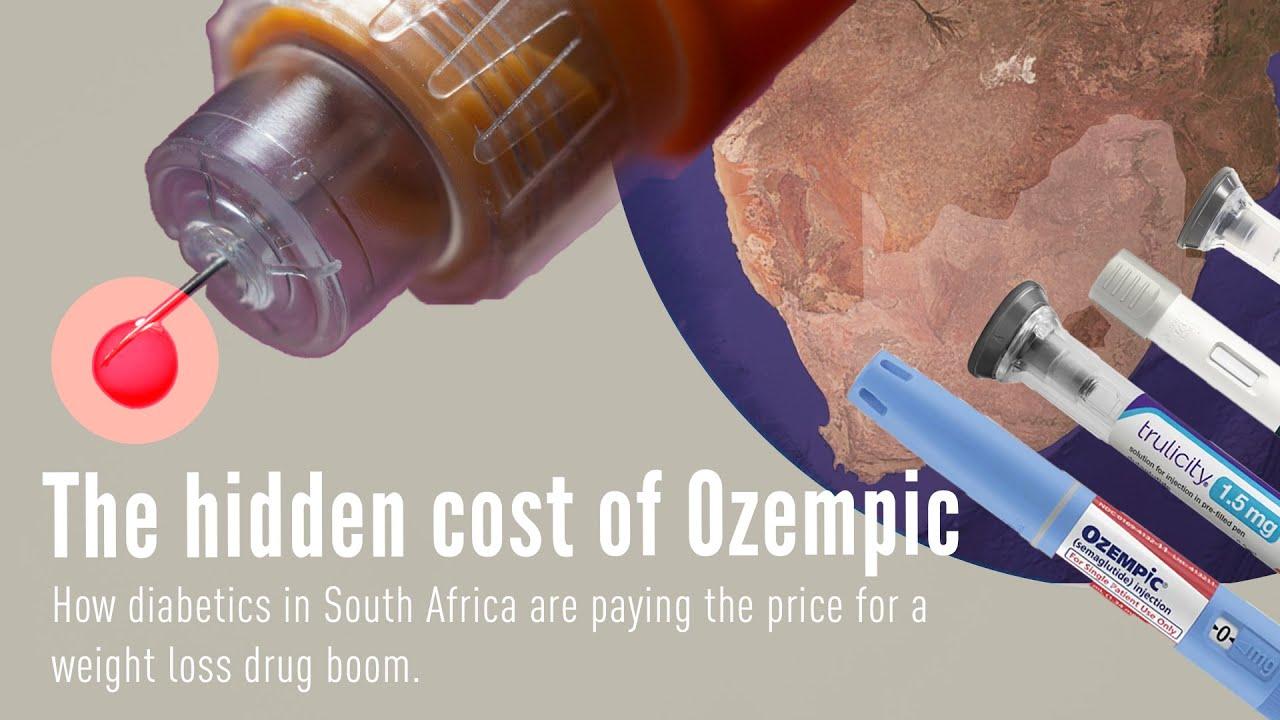
Patients over Profit: Why South Africa is running out of insulin pens
Bedaquiline and the Cost of Secondary Patents
In another example, South Africa was buying bedaquiline, a lifesaving drug to treat drug-resistant tuberculosis patented by Johnson & Johnson, for about R5400 for a 6-month course per person. When more affordable generics were made available in 2023 at R2131 for a 6-month course per person, South Africa could not access them because it had granted secondary patents to Johnson and Johnson. These secondary patents were rejected in other countries with pro-public-health laws, such as India, allowing people affordable access to bedaquiline. Had South Africa applied stricter patentability criteria and enabled administrative challenges to weak patents, generic manufacturers could have entered the market sooner, and the price of bedaquiline could have been lowered by approximately 40%, resulting in significant savings for the public health system.
A Pattern of Missed Opportunities
Despite these moments of vulnerability, which the private sector has used as opportunities to tighten its grip on the market and increase its profits, the government has failed to act.

Why Patent Reform Is a Public Health Imperative
Patent law reform is not merely an abstract legal exercise. It is a public health imperative. It determines how quickly affordable medicines can become available, how responsive our health system is during crises, and whether the constitutional right to healthcare is realised in practice. If the Patent Act is not amended, history will repeat itself, and, with the next public health crisis, there will be outrage that, while we cannot access affordable medicines to save lives, pharmaceutical companies profit. Again, we will petition for waivers from international institutions such as the World Trade Organization. Again, our parliamentarians will bemoan how long it is taking for patent law reforms that are in line with our policy. Again, people's right to healthcare will be sidelined.
This is why we are raising the questions: Is the delay merely administrative? Or are there forces behind the scenes once again influencing the pace and direction of reform? Fears that industry is again dictating how and when policy and legal reforms take place are not baseless. PharmaGate exposed a coordinated effort to stall public interest reforms in South Africa. More than a decade later, the greatest indictment is not that such efforts existed, but that they appear to have succeeded. While there is no evidence that similar activities are occurring today, the prolonged uncertainty inevitably invites speculation and concern. Because, at the end of the day, we still have a system where corporate interests continue to enjoy protection, while people are unable to access lifesaving medicines.
A Constitutional Right Awaiting Legislative Action
Our Constitution guarantees everyone the right of access to health care services. The government's responsibility is to make and implement laws and policies that make that right a reality. So far, the government has offered commitments instead of concrete legislation.
It's long past time for our government to take the South African people's right to healthcare seriously. To do so, the government must fulfil its already-promised commitments to table, pass, and implement the Patents Amendment Bill, and ensure that people's lives come before corporate profits.

Azalet Dube: The health promoter who believes in the power of teamwork

MSF expands humanitarian assistance to Nyamapanda in support of Malawians
