
In Nigeria, the number of women dying in pregnancy or childbirth is among the highest in the world. In the town of Maiduguri, health promotion supervisor Hauwa Tanko Audu and her team are determined to change that...
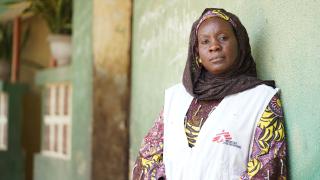
There is no feeling like helping to save a life. I’m a health promoter in Maiduguri, the capital of Nigeria’s Borno state, where Doctors Without Borders (MSF) provides specialised medical care for pregnant women and newborns. We received feedback from the community, women said that I am alive today because of MSF.
In Nigeria, the maternal death rate is among the highest in the world: in 2024, one woman in every hundred giving birth lost her life. Here in Borno state, where armed conflict has forced many displaced people to live in tents and makeshift shelters, the lives of mothers and newborn babies are at particular risk.
A bridge to life-saving care
In partnership with the Nigerian Ministry of Health, MSF runs a specialised obstetric centre that provides comprehensive care for pregnant women and newborns, as well as two centres that offer more basic care, closer to the community. As a health promoter, we are a bridge between the community and these facilities. We work to build acceptance and trust, share life-saving information about the health risks around pregnancy and childbirth, and let people know about the free care MSF provides.
Once in the middle of a meeting with some community leaders, a man mentioned that his pregnant wife was bleeding at home. We ended the meeting on the spot and rushed his wife to our local birthing centre, and from there to the obstetrics centre. The care she received saved her life, and the man has become one of our volunteer “mobilisers”, supporting others in his community to access vital treatment.

Lifeblood of the community
We’ve also built strong bonds with some of the young men in the community, who volunteer to donate blood for our critical patients. We host blood drives and host events like football matches to raise awareness and encourage donations. If a woman is haemorrhaging and needs blood urgently, we can rush donors to the hospital in an MSF Keke (also known as a tuk-tuk).
I still remember one of the patients whom we were able to treat after volunteers donated blood. Sadly, she lost her baby, but she survived. Later, when we met again, she hugged me and said that she would have died and left five children without a mother. She told me that whenever she sees an MSF vehicle, she stands as a sign of respect, because MSF saved her life.

A passion for knowledge
I was a schoolteacher before I worked for MSF – I have a passion for passing on knowledge, and those skills are vital as a health promoter. I visit communities in Maiduguri to provide education on danger signs in pregnancy and in newborns, emphasising the importance of coming to the hospital in time.
Because many people can’t afford the health services provided in other facilities, a lot of women here give birth at home. We inform them that MSF is free and provides antenatal and postnatal care. Now, due to the presence of MSF and our health promoters in the communities, more people are delivering in hospitals.
We can address or prevent most complications that occur during pregnancy or childbirth if women can get to the hospital on time. Raising awareness about the care MSF provides and the importance of maternal healthcare, in collaboration with community mobilisers and traditional birth attendants, is a matter of life or death for women and babies.
Maternal mortality in northern Nigeria is an emergency. We have women with eclampsia fighting for their lives; babies in distress, fighting for their lives. This is an emergency and requires an emergency response.Hauwa Tanko Audu, Health Promotion Supervisor

Follow-up care
After our patients have left the hospital, we provide follow-up care for them and their babies. If they can’t afford transportation or need immediate treatment, we pick them up in our tuk-tuk. Sometimes you must stop whatever you’re doing and take someone to the care centre to save their life.
One of the methods we raise awareness of is kangaroo mother care, or KMC, especially for babies born preterm or at a low birth weight. We encourage new mothers to begin skin-to-skin contact as soon as possible after their baby arrives and to continue it for at least eight hours a day while exclusively breastfeeding. This can help the babies gain weight, strengthens their immune system, supports their long-term development and benefits mothers’ mental health – and it significantly improves newborns’ survival rates.
We also provide guidance on getting sufficient nutrition, which is incredibly challenging for many of our patients. The security situation outside of the city has made it too dangerous for many families to access their farms or fishing areas. This means that a lot of breastfeeding mothers here are undernourished, so we give them information on how to get a variety of nutrients with the little food they have.

Your support
This is my community: I’m from Borno state, and every day I see women like me getting very good care, I feel glad. But it's hard to reach all the people who need treatment in the community, and because of our limited budget, we can’t admit newborns who were delivered elsewhere. It is one of the hardest parts of our job; the parents come to us looking for help, and we see the pain in their eyes.
In Maiduguri, there are many orphaned children running up and down the streets without the love and care of their mothers. Donations from people like you mean that we can prevent children from growing up without their parents. We can hire more staff, treat more women and babies.
Maternity care is life-saving care. Many of our patients are fighting for survival, and they need urgent treatment. With your support, we can save their lives.
Maternal mortality in northern Nigeria is an emergency. We have women with eclampsia fighting for their lives; babies in distress, fighting for their lives. This is an emergency, and it needs an emergency response.

The hidden toll of child malnutrition: caregiver mental health at MSF's Nilefa Kiji facility

MSF launches Tom Brown programme in Kebbi to prevent child malnutrition
