
Belgium
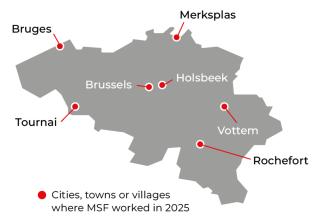
We are working across Belgium, particularly in Brussels and at the border with France, to provide medical and psychological care to asylum seekers who are living on the streets, in car parks, in camps, and in other precarious conditions.
However, owing to the government’s failure to provide everyone with the accommodation and other services they were entitled to, thousands ended up sleeping on the streets, in car parks, or in camps, for months.
Many people were extremely vulnerable, having fled conflict or endured torture or persecution because of their political views or sexual orientation.
Our activities in Belgium in 2025
Data and information from the International Activity Report 2025.
MSF IN BELGIUM IN 2025
In Belgium, Doctors Without Borders (MSF) offers medical and psychological support to migrants and refugees, and calls on the government to fulfil its obligations towards them.
MSF'S MEDICAL ACTIVITIES IN 2025

1,960
1,96
740
74
49
49
Filter Tips
- Try a different country, year, format, or topic.
- Clear one or more filters