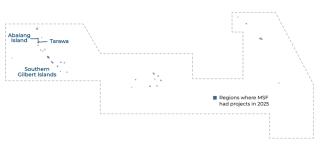
Drought, saltwater intrusion, and sea-level rise have reduced the availability of fresh water and nutritious foods in Kiribati, a remote island nation in the central Pacific Ocean. This has contributed to a range of health issues, including undernutrition among women and children, obesity, and non-communicable diseases, such as gestational diabetes and pregnancy-related hypertension, placing more pressure on an overstretched public health system.
In 2025, MSF conducted health screenings across villages on Abaiang island and Eita, South Tarawa. We also trained community volunteers to identify early signs of malnutrition and monitor children aged six to 59 months for undernutrition and diarrhoeal diseases. MSF refers those found at risk to health centres.
In addition, we trained community volunteers to use tools, such as the CRADLE Vital Signs Alert system, to detect early signs of hypertension, and carry out blood sugar tests for diabetes. In clinics, we worked to improve early detection of gestational diabetes by offering oral glucose tolerance tests, thereby ensuring safer pregnancies. Together with clinic nurses and community volunteers, we built stronger local capacity to identify at-risk women, reducing costly emergency referrals to the capital.
Our water and sanitation team tested wells in Abaiang for salinity and coliform bacteria. The results showed that nearly all were contaminated with coliforms, and 19 per cent were over safe salinity threshold levels for people with hypertension. We integrated these findings, along with GPS data, into a multilayered interactive geographic information system map which we developed with the Ministry of Health and Medical Services. This tool is being used by MSF’s water and sanitation team to guide well rehabilitation and improve rainwater harvesting methods.
MSF continues to provide midwifery support and training at Tungaru Central Hospital. Meanwhile, we concluded our support to pharmacy services at the hospital, which included improving supply, waste, and regulatory processes, in October.
*Coliform bacteria, while not harmful themselves, suggest the presence of harmful pathogens when found in water systems.