MSF, Doctors Without Borders, MSF activities in Malaysia
Our teams provided general healthcare and mental health support to refugees in urban settings and detention centres. We also refered patients for specialised healthcare.

In 2024, over 7,800 Rohingya refugees embarked on hazardous boat journeys from Bangladesh or Myanmar to Malaysia, an 80 per cent increase compared to 2023. However, not all reached Malaysia, as many were forcibly turned back to international waters, while more than 650 were lost at sea.[1]  

Malaysia’s non-signatory status to the 1951 Refugee Convention and the absence of any formal legal framework exposes refugees to immigration raids, arrests, detention, discrimination, and deportation. Despite recent efforts to transfer detained mothers and children from immigration detention centres (IDCs) to dedicated facilities, sustainable long-term solutions and proper alternatives to detention have yet to be implemented.

[1] UNHCR - Focus on saving lives, urges UNHCR as more Rohingya flee by sea | UNHCR Asia Pacific 

Our activities in Malaysia in 2024

Data and Information from the International Activity Report 2024.

MSF IN MALAYSIA IN 2024 In Malaysia, Doctors Without Borders (MSF) provided medical and humanitarian assistance to refugees, mainly Rohingya people, who encounter significant barriers in accessing healthcare and protection.
MSF, Doctors Without Borders, MSF activities in Malaysia

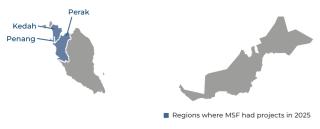
MSF teams assisted the most vulnerable refugees – undocumented Rohingya women and children – through a fixed clinic in Penang state and six mobile clinics in Penang and Kedah. We also supported healthcare in two IDCs in Kedah and Perak. Services included basic healthcare, treatment for sexual and gender-based violence, mental health support, and financial assistance for people in need of specialist referrals to Ministry of Health hospitals.  

We also referred patients, particularly women and adolescent girls, to the UNHCR (The UN Refugee Agency), as registration with the UNHCR allows people to receive specialist care at a more affordable price. Our teams reported a high demand for antenatal care and family planning. 

In the two IDCs, we provided medical and psychosocial care, and distributed essential hygiene items, such as soap and sanitary pads. We also conducted training on medical and mental health issues for immigration officers and medical assistants.  

Advocacy played a key role in our activities in Malaysia. We regularly engaged with government authorities and civil society organisations to highlight the plight of Rohingya refugees. We continued to oppose the detention of refugees in IDCs and called for them to be issued identity documents, enabling them to work, access healthcare, and be better protected from exploitation and discrimination.  
 

IN 2024

Filter Tips
  • Try a different country, year, format, or topic.
  • Clear one or more filters