

Key Takeaways
- MSF Year in Review 2025: MSF worked in 72 countries in 2025, supported by 7.5 million donors and nearly 66,000 staff, even as global aid cuts, including the US freeze on foreign assistance and the closure of USAID, strained humanitarian systems worldwide.
- Sudan is described as the world's worst humanitarian crisis, marked by ethnic cleansing in Zamzam and El Fasher, a collapsed health system, and a measles surge in Zalingei linked to vaccine delivery failures.
- In Gaza, MSF documented what is widely described as genocide, the killing of 15 MSF colleagues since October 2023, and the expiration of MSF's registration to operate in Palestine by year-end.
- Neglected crises, including South Sudan's largest-ever cholera epidemic, Haiti's gang violence, DRC's M23 advance, and Myanmar's earthquake and Rakhine conflict, received insufficient global attention despite severe humanitarian need.
- Progress was made on paediatric tuberculosis treatment through the TACTiC project, nearly doubling treatment initiation rates, though this progress is threatened by funding cuts to diagnostics.
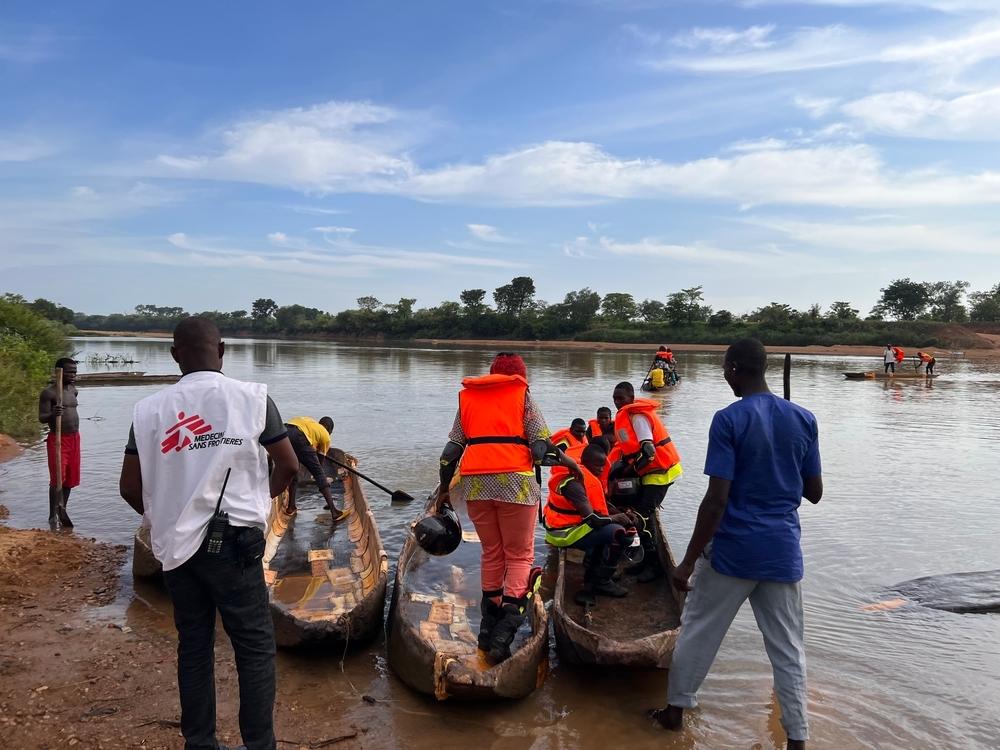
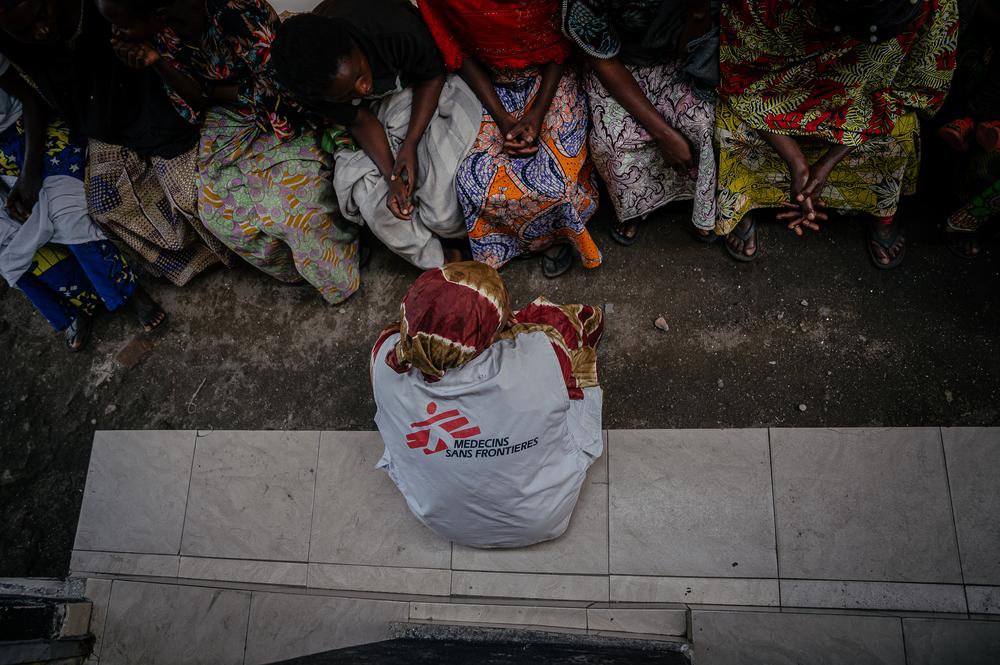
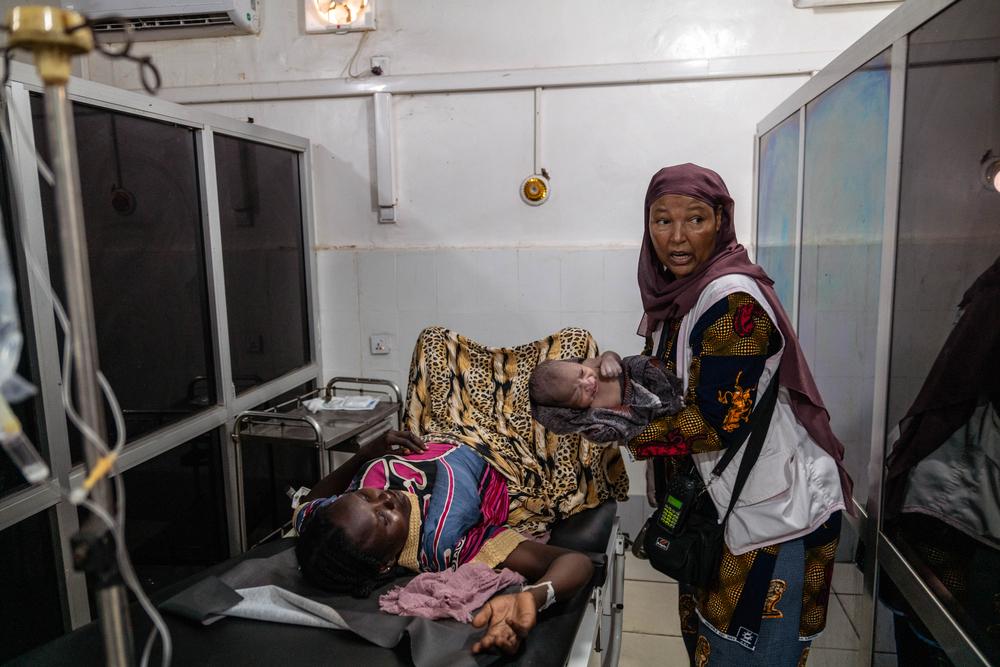
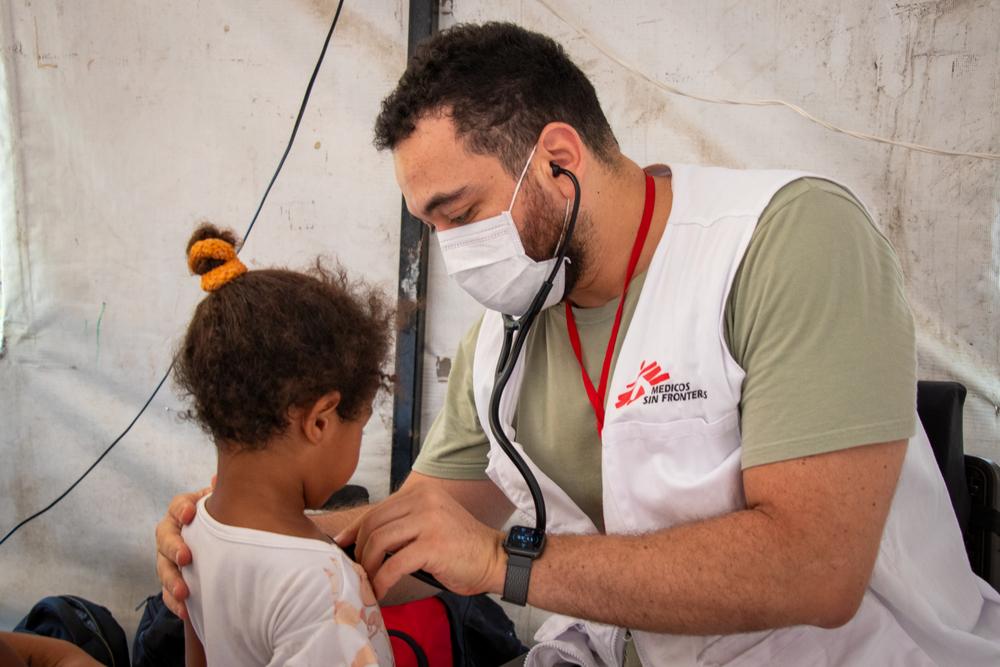
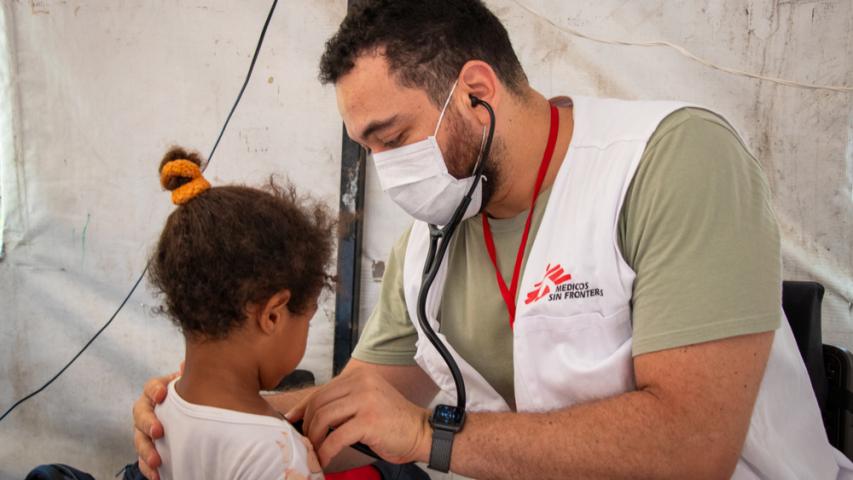
The scale of people's needs – whether due to war, internal instability, disease outbreaks, or the difficulty in accessing medical care – became further highlighted in 2025 amid a climate of aid cuts and anti-humanitarian rhetoric. Doctors Without Borders (MSF) teams around the world worked to assist people in 72 countries, in an ongoing act of solidarity.

Threats to Humanitarian Response
Humanitarian funding had been declining in the years before the United States (US) abruptly froze foreign assistance in January 20251, coinciding with the beginning of President Trump's second term, before making cuts to its aid budget. The US administration gutted vital funding to the Global Fund, Gavi, and PEPFAR2, and shuttered USAID, thereby cutting off support to lifesaving health programmes. Other governments also cut their aid funding.
MSF was not directly financially affected by the funding cuts. But our teams spent most of the year trying to understand and navigate the gaps, as organisations around us closed or scaled back their activities. In some places, demand for our services consequently increased.
In Somalia, disruptions to aid halted shipments of therapeutic milk for months. As a result, the number of severely malnourished children admitted to MSF-supported facilities rose 73 per cent in the first nine months of 2025, compared to the same period in 2024. In the Democratic Republic of Congo (DRC), we made unplanned purchases of antiretroviral medicines to provide to some groups of people living with HIV after their treatment programmes were stopped, and for post-exposure prophylaxis for HIV, used to treat victims and survivors of sexual violence, after the dismantling of USAID led to the cancellation of an order for 100,000 post-rape kits.

Sudan – the World's Worst Humanitarian Crisis
April marked two years since the outbreak of conflict in Sudan between the Sudanese Armed Forces and the paramilitary Rapid Support Forces (RSF) and their allies. Both sides have committed atrocities, especially in Darfur. Despite prior warning for months from MSF and others, the scenes following ethnic cleansing by the RSF in Zamzam displacement camp and in nearby El Fasher were particularly ghastly.
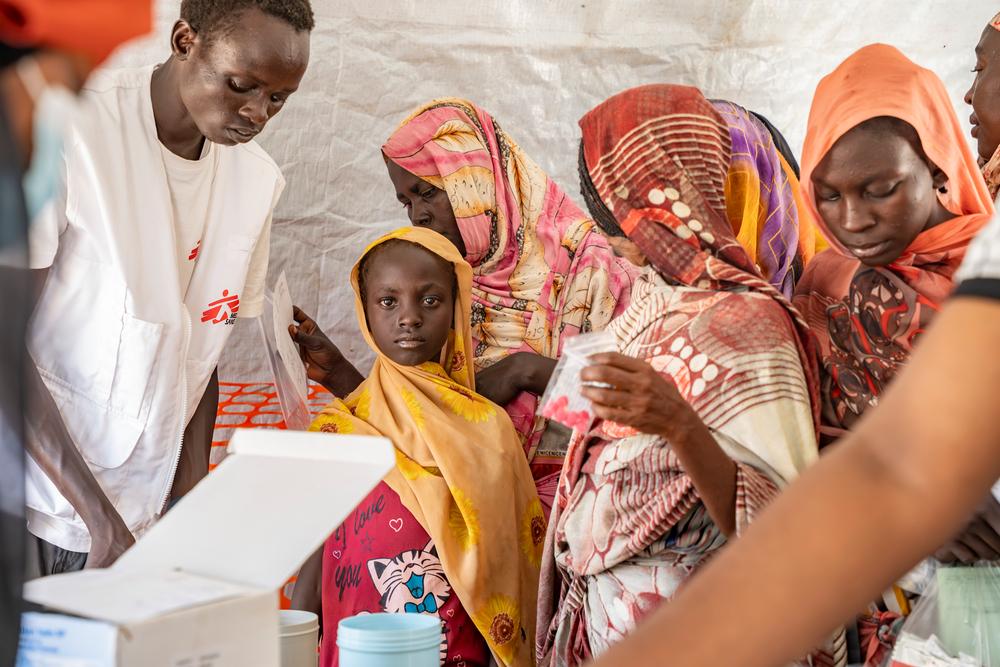
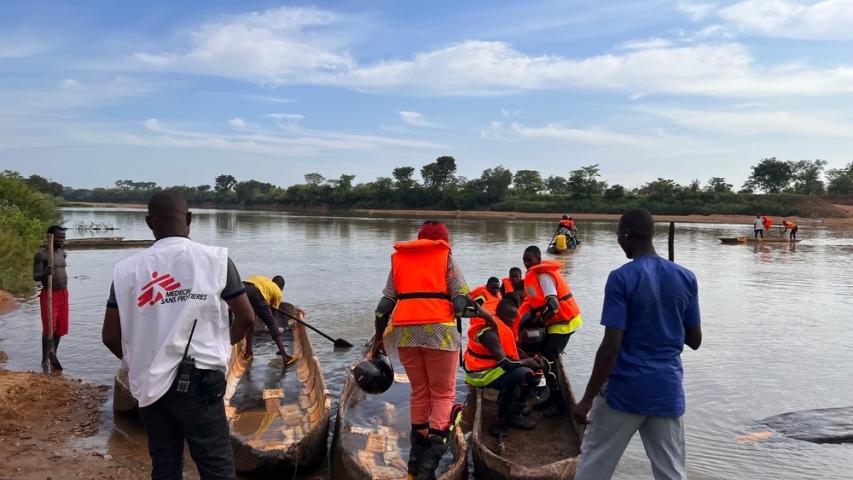
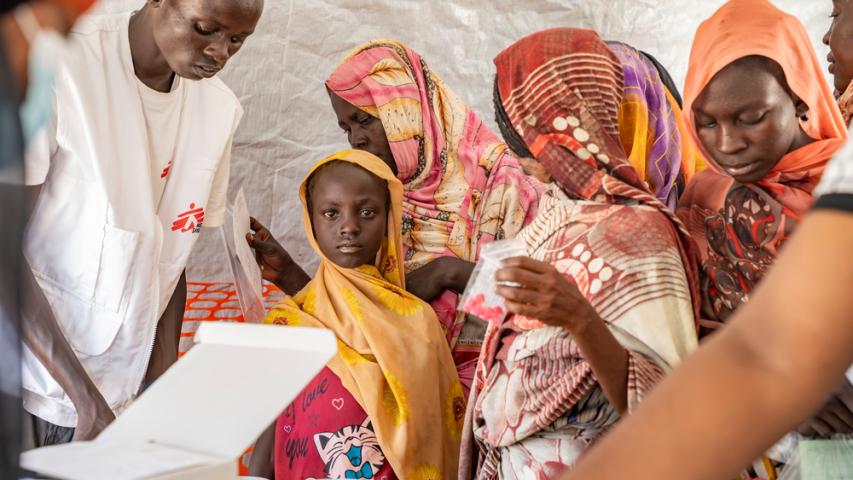
Although we were able to regain access to the capital, Khartoum, the situation for people in many parts of the country remained dire, as the health system has collapsed and few humanitarian organisations are present. Our teams responded to high levels of malnutrition and mental health issues, as well as horrific sexual violence. The crisis is not contained within Sudan; hundreds of thousands of people have fled into neighbouring Chad and South Sudan, where we also work.
However, our efforts in Sudan were often constrained by the high levels of violence in some places or by bureaucratic demands, which hindered the transport of staff and supplies. In Zalingei, measles cases surged in the last quarter of the year following a failure to deliver and coordinate measles vaccines. It all translates to an insufficient humanitarian response, making Sudan the world's worst humanitarian crisis.

Genocide in Gaza
In the Gaza Strip, Palestine, Israel continued to pursue what has now been widely described as a genocide in retaliation for the horrendous attacks committed by Hamas in October 2023. Israeli forces continued to kill Palestinians, displace them from their neighbourhoods, and deny them sufficient supplies of food and water, and access to healthcare. Living conditions for people in Gaza City and the north of Gaza deteriorated even further in September, as they became trapped in "a siege within a siege".
In late May, the Gaza Humanitarian Foundation, an Israeli-US initiative, was launched as part of a cynical, degrading attempt at providing "aid". Their food distribution sites soon degenerated into scenes of slaughter, as around 2,600 people were killed and thousands more injured3. We treated many people who had been wounded or traumatised by what they had seen.
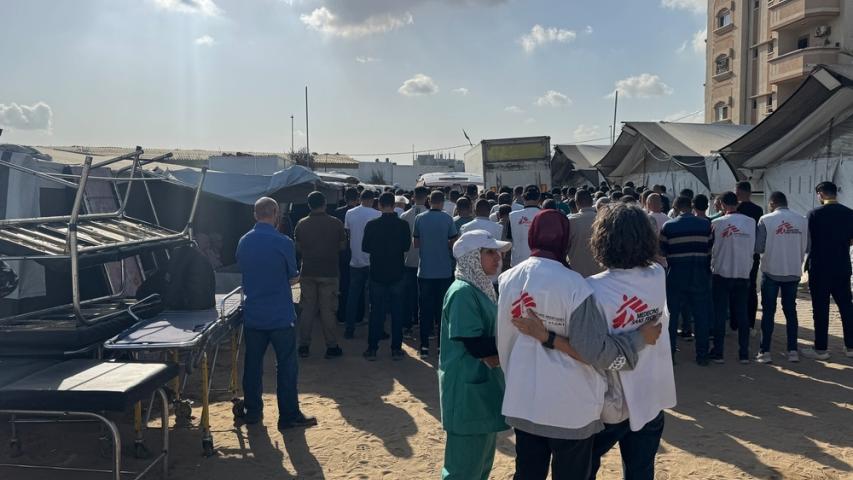
Our teams throughout the Strip quickly adapted our response as front lines moved or evacuation orders were issued. However, even healthcare facilities were not spared: Israeli forces attacked and targeted hospitals, killing personnel. Six of our colleagues were killed in Gaza in 2025, bringing the total number to 15 since October 2023. We deeply mourn their loss.
Despite the ceasefire implemented on 11 October 2025, Israel continues to kill people and target civilian infrastructure, and impede the entry of aid into Gaza.

In the West Bank, violence and the erasure of Palestinians from their land – described as ethnic cleansing – intensified, as Israel expanded settlements, destroying refugee camps and homes. Thousands of people were forcibly displaced and prevented from seeking medical care, including much-needed psychological support to cope with the extreme hardship of their daily lives.
On 30 December, Israel informed 37 NGOs, including MSF, that their registration to work in Palestine had expired. The Israeli authorities accused us of not cooperating with them on registration, even though the new procedures would endanger our staff and despite us trying to engage with them, unsuccessfully, for many months. At the end of the year, Israel instigated a smear campaign against aid organisations, with MSF as the main target, in an attempt to arbitrarily restrict access to aid for Palestinians and remove independent witnesses working on the ground.
The war on Gaza has had repercussions across the wider Middle East, with growing instability in Yemen, and Israel continuing to bomb southern Lebanon, despite the ceasefire implemented in November 2024.

Responding to the Long-Lasting Trauma of Conflict
The war in Ukraine showed no sign of abating in 2025. Russian drone attacks and bombing increased, targeting civilian buildings and energy infrastructure, leaving people exposed to freezing temperatures during the winter months. With no ceasefire in sight, we continue to address people's ongoing physical and psychological trauma, while constantly adapting to shifting frontlines.
Since the fall of the Assad regime in Syria in 2024, MSF has been able to return to areas of the country that had been inaccessible for a decade. Our teams are helping to restore health services and respond to the urgent needs of people still affected by sporadic fighting.
Neglected Crises
The situation in South Sudan sharply deteriorated during the year, as conflict in the country restarted. People have been left behind in crisis, as global attention and funding shifted elsewhere. Communities endured displacement, flooding, malnutrition and multiple disease outbreaks, including the largest cholera epidemic in the country's history.
The decline in international assistance has stretched South Sudan's health system to breaking point, with chronic shortages of medicines and staff. To make matters worse, health facilities and personnel have been targeted in the conflict. In 2025, we experienced nine attacks on our facilities and staff in the states of Central Equatoria, Jonglei, and Upper Nile. Ulang and Old Fangak hospitals were forced to close, and staff in our facilities in Pieri and Lankien, Jonglei, had to evacuate following airstrikes.
In Port-au-Prince, Haiti's capital, anarchy continues to reign, four years after President Moïse's assassination. People are subjected to appalling violence by gangs and the police, and are too afraid to leave their homes to seek healthcare. Sexual violence is being used systematically to terrorise women and girls: for example, the number of victims and survivors treated at our Pran Men'm clinic almost tripled between 2021 and 2025.

We maintained activities where possible, despite a deliberate attack on a convoy of our ambulances and intense fighting near our facilities, but we were forced to suspend work in Turgeau in March and Carrefour in April. In October, we made the difficult decision to permanently close Turgeau due to insecurity, further reducing people's access to healthcare.
The long-running conflict in northeastern DRC continued in 2025, causing repeated waves of displacement and a dramatic rise in basic needs, as the M23 armed group rapidly advanced through North and South Kivu provinces.
Sadly, MSF staff were not immune to the violence; in the space of four months, three of our colleagues were shot dead in North Kivu. Peace agreements have had little or no effect, and the fighting goes on.
In Myanmar, another country far from the international spotlight, fighting persisted in several areas, including Rakhine state. In December, dozens of people were killed when a busy hospital was bombed in Rakhine. In May, a powerful 7.7 magnitude earthquake struck the centre of the country, killing over 5,000 people and injuring and displacing thousands more. Our teams responded by providing medical and mental healthcare, as well as water and sanitation needs.
The campaign of violence against the Rohingya continued in Myanmar. Those still living there face severe restrictions on their movements and struggle to obtain even basic healthcare. For the one million Rohingya who live in the Cox's Bazar refugee camps in Bangladesh, the inhumane living conditions are being exacerbated by cuts to funding.

Adapting Activities for People on the Move
By the end of 2025, we downsized or wound up most of our migration-related projects in Central America, including those in Mexico, Panama, Guatemala, and Honduras. Changes in migration policies in the US, and in some Central American countries, resulted in a significant decrease in people heading north during the year.
In Europe, our teams continued to work with migrants and asylum seekers in Greece, Italy, France, Belgium, Serbia, and Poland. We spoke out about inhumane migration policies implemented by some of these countries, and by the European Union; in Poland, we urged the authorities to uphold the right for people to seek asylum on Polish territory, while in France, we called for recognition and protection for minors.
Our work in Libya was suspended by authorities, alongside other organisations working on migration, leaving hundreds of migrants forgotten in the hand of traffickers.
In November, we resumed our search-and-rescue operations in the Central Mediterranean, the world's deadliest migration route4, with a new, faster boat, the Oyvon. Our teams also worked in Senegal and Mauritania to assist people on the move on the perilous West Africa/Atlantic route, as they head for the Canary Islands.

Responding to Natural Hazards
During the year, we also assisted people affected by natural hazards. In November and December, we worked in Jamaica for the first time, in response to the devastation caused by Hurricane Melissa. MSF provided emergency medical care, rehabilitated damaged health facilities, and restored water, sanitation and hygiene services across the battered island. After assessing the situation in Cuba, we donated supplies of essential drugs.
In October, we provided emergency medical and logistical assistance after Hurricane Priscilla hit Mexico. In Sri Lanka, we worked to restore basic healthcare, water and sanitation after Cyclone Ditwah caused widespread flooding and landslides in November.
Tackling Diseases
For the third year running, we responded to large-scale outbreaks of cholera, a deadly yet entirely preventable disease, that once again claimed thousands of lives across the world. Our teams worked to curb epidemics in DRC, South Sudan, Sudan, Yemen, Mozambique, Tanzania, and across the Sahel. In many of these places, outbreaks were exacerbated by conflict and displacement.
Significant progress was made in the treatment of paediatric tuberculosis (TB) in 2025. MSF's Test, Avoid, Cure Tuberculosis in Children (TACTiC) project aims to reduce the high death rate of children with TB. The project released data from its operational research towards the end of the year, which demonstrated that implementing the World Health Organization's recommended treatment decision algorithms improves diagnosis and enables nearly double the number of children to start lifesaving treatment. However, these efforts are being compromised by funding cuts for diagnostics and treatment.
Closing Statement
We are extremely grateful to our 7.5 million donors, who make our work possible, and to our nearly 66,000 staff, who remain committed to delivering care and assistance wherever it is needed, despite ongoing threats to humanitarian activities across the world.
*MSF Directors of Operations: Dr Ahmed Abd-elrahman, Akke Boere, Renzo Fricke, Mahama Gbane, William Hennequin, Kenneth Lavelle, Mari Carmen Viñoles Ramon
-
1
Council on Foreign Relations, https://www.cfr.org/articles/great-aid-recession-2025s-humanitarian-crash-nine-charts
-
2
Gavi, the Vaccine Alliance is a global partnership which increases access to immunisation. PEPFAR – US President’s Emergency Plan for AIDS Relief
-
3
Gaza Ministry of Health via TRTWorld, https://www.trtworld.com/article/e1480cc894cf
-
4
IOM, Missing Migrants, https://missingmigrants.iom.int/region/mediterranean

MSF demands Gilead cut Lenacapavir price to $40 as AIDS 2026 opens in Rio

Anti-Migrant Violence Triggers Trauma and Medical Emergency on the South Africa-Zimbabwe Border
