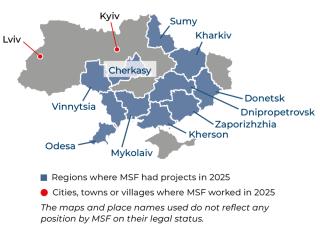
In 2025, MSF worked in five hospitals near frontlines in the south and east of Ukraine, including the city of Kherson. We responded to mass-casualty incidents, referring the injured in our ambulances and supporting emergency departments, intensive care units, and operating theatres. In addition, we treated many patients for chronic conditions that had become acute owing to a lack of general healthcare.
We ran mobile clinics and ambulance referrals along the frontlines in Donetsk, Dnipropetrovsk, Kharkiv, Kherson, Mykolaiv, Sumy, and Zaporizhzhia regions. Our teams screened for tuberculosis and offered treatment for chronic diseases, such as hypertension, mainly to elderly people and people with limited mobility, many of whom had resorted to living in basements or shelters to escape the shelling.
During the year, we increased our activities in displacement shelters to assist the growing number of people fleeing the frontlines. The number of consultations we provided through mobile clinics increased in 2025, compared with 2024.
Repeated attacks on energy infrastructure by Russian forces further disrupted every aspect of daily life, especially in the winter, when the temperature dropped to minus 20 degrees Celsius. Widespread power cuts impacted the functioning of hospitals, often leading to delays in the provision of care, and exacerbated health issues among people living in basements and shelters.
In Cherkasy, Dnipro, Odesa, and Zaporizhzhia, MSF ran rehabilitation services comprising physiotherapy, mental health care, and nursing support for patients who had recently undergone trauma surgery, including amputations.
As well as delivering direct care, we continued to send medical supplies to hospitals near the frontlines and conduct training for mass-casualty incidents.
In Vinnytsia, we run a specialised post-traumatic stress disorder clinic offering psychological support, health promotion, and social assistance. In 2025, we saw not only an overall rise in consultations at the clinic, but also an increase in complex and severe cases, with many patients suffering the effects of prolonged exposure to frontlines.