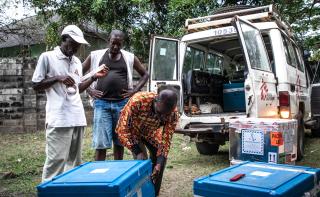
Across our projects, MSF teams provided essential care, including vaccinations, paediatric care, outpatient consultations, sexual and reproductive care, emergency room services, and nutritional support. We also improved people’s access to water, sanitation, and hygiene services by constructing and rehabilitating infrastructure.
Throughout the year, people crossed into Gambella region from South Sudan, fleeing several spikes of violence. They arrived either at established camps, settling alongside families who have been displaced for years, or at sites which emerged to accommodate new arrivals. As the number of displaced people grew, cuts to international humanitarian funding by key donors, such as USAID, strained basic services like food distribution, healthcare, and water and sanitation support.
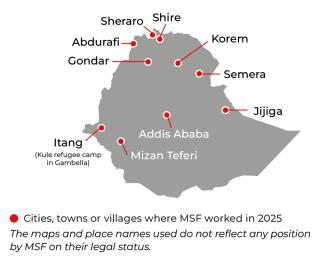
MSF teams continued to run a health centre in Kule refugee camp. In addition to our regular activities at the health centre, which include malaria and sexual and gender-based violence care, we treated newly arrived refugees for violence-related injuries and cholera across the Gambella region, and distributed relief items, such as soap and jerrycans. In November, for the first time in Ethiopia and in a refugee camp globally, we completed the rollout of the malaria R21 vaccine for children under five in Kule.
In Ethiopia’s Somali region, where repeated failed rainy seasons have turned drought into a daily struggle for survival. MSF teams are screening children for malnutrition and supporting nutrition, water, and sanitation activities with local authorities in the Barey district, Afder Zone, while also conducting vaccination campaigns to help overstretched health facilities cope with deepening funding cuts. Meanwhile in Tigray, people still live in overcrowded camps, with little access to essentials, three years after the cessation of hostilities in the region. In Shire and Sheraro, our activities included sexual and reproductive healthcare, care for sexual and gender-based violence and mental health conditions, and treatment for neglected tropical diseases. To tackle an outbreak of cholera in hard-to-reach areas, we set up treatment units and improved infection prevention and control measures.
In Korem town, whose region has faced health emergencies such as measles, cholera, and malnutrition while being affected by instability, limited access to health services, and damage to health infrastructure, we provided emergency and referral services, medical supplies, and staff training for maternal and child health services at the Korem general hospital. We also donated supplies to four other facilities in the area.
From malaria outbreaks in southeast Ethiopia to childhood malnutrition in Afar, and kala azar, snakebites, and epidemic threats in Amhara, our teams strengthened lifesaving care across Mizan Teferi, Semera, Gondar, and Abdurafi by responding to urgent medical needs and maintaining support for communities facing recurring health crises.
MSF continues to call for accountability for the deaths of our colleagues
On 24 June 2021, our colleagues María Hernández Matas, Tedros Gebremariam Gebremichael, and Yohannes Halefom Reda were killed on duty in Tigray. Since the Ethiopian authorities have not responded to our repeated requests for a formal and transparent investigation, we released our internal findings in 2025, which confirmed the attack as an intentional killing of clearly identified aid workers. We demand that those responsible for attacking humanitarians are held accountable.